


How to Get Into Gaming as a Hobby, Job, or Business
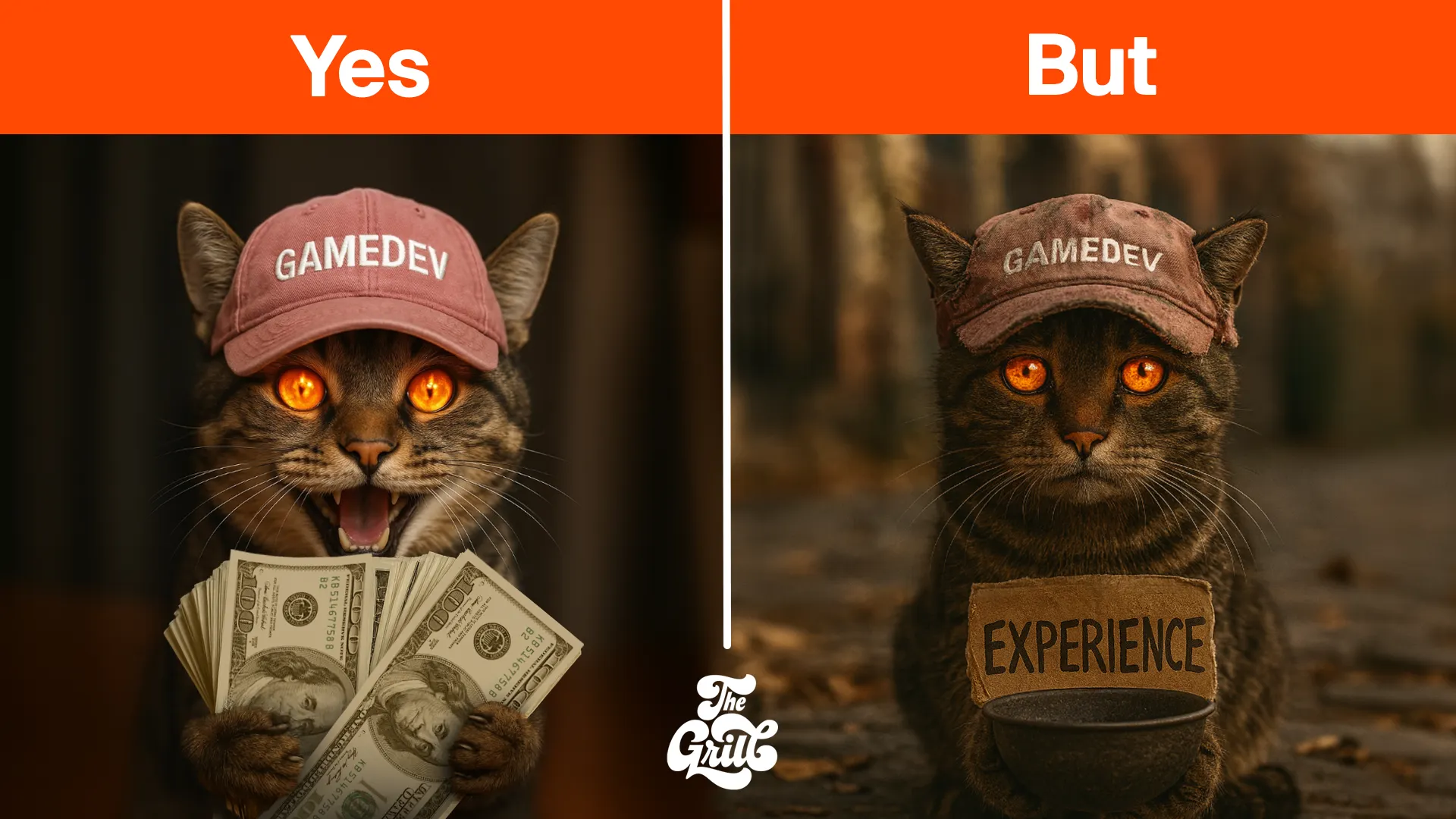
How can you achieve your dream, start a career in game development, and release your own game? Sergey Ulankin, currently Head of PC & Consoles Publishing at HeroCraft, and formerly editor-in-chief at gaming media Kanobu and RAWG, shared his insights at the first major design festival, The Grill, in Belgrade. We’ve selected the key takeaways from his talk.
Step 1: Got the Skills?
What’s most important in games? Code and art. Or art and code. Their priority might shift depending on the genre, but they generally remain at the top. Skills like game design are less critical, which is reflected in the salary ranges for these specialists.
Therefore, if you want to get into the industry, there are two main paths. The first is self-education, where you learn the necessary hard skills to bring your idea to life. A prime example is the story of the cult classic Undertale, created by composer Toby Fox, who had to teach himself how to design and code.
The second path is to assemble a team of people with the right skills from among your friends, colleagues, or even friends of friends.
Do you think you can do everything with “vibe-coding” and neural networks? This approach doesn’t actually work yet. Generative technologies cannot replace a professional. They are only a supplementary tool that experts can use to speed up routine tasks. Without your own expertise, it’s impossible to evaluate the quality of AI-generated work and determine if it’s trash or something great.
Step 2: Three Levels of Immersion in Game Dev
The ocean of game development is dark and confusing, with sharks that might take a bite out of you. For those who don’t want to dive headfirst into the abyss of the gaming industry immediately, there are several levels of immersion.
Level #1: Game Jams. These are similar to hackathons, where participants, either individually or in teams, create a game on a given theme within a short timeframe. This is an excellent opportunity to test your skills, make useful connections, and possibly create a prototype that could grow into a commercially successful project.
Level #2: Internships (for Juniors). Internships exist, even at small studios, but they might not be widely advertised. Newcomers are advised to directly contact team leads or HR managers at companies to inquire about options.
Level #3: Consulting (for Senior Professionals). For those who are already senior-level specialists in a related field, there’s a chance to start by consulting for game studios. It’s best to do this pro bono to gain experience and showcase your skills.
There’s also the classic career path. The most obvious way is to look for job openings. However, it’s important to consider that the market currently has a lot of layoffs and high competition. That said, hard skills like programming or art direction translate well, while content or marketing specialists might face a pay cut when transitioning from another industry into game dev.
Step 3: Making the Dream Game?
The main mistake beginners make is creating a “dream” project. They start with a brilliant idea without considering market realities. The correct approach is the opposite. First, you need to analyze market demand and understand what’s currently popular. Then, you need to compare this with the resources you have (what skills you possess, what kind of team you have). Only after that, from a handful of suitable options, should you choose the idea that seems most appealing.
For example, many beginners want to make Point & Click games or 2D platformers. But if we look at the average revenue data for these genres, it turns out they bring in 1.5 times less than visual novels ($62.5k and $65.9k vs. $90.7k, according to Gamalytic data). At the same time, visual novels are often easier to develop, as there are many frameworks and engines where no coding is needed, and you only need art and narrative to create a game.
Step 4: Show Me the Money
Let’s discuss funding options without the extreme choices like “quick loans” against your house or financing from your life savings. Here are the available options:
Publishers and Investors. What’s the difference? Investors are less willing to take risks and prefer to invest in proven genres. Publishers, unlike investors, not only provide money but also handle marketing, porting, and QA. In return, they can claim the game’s intellectual property (IP).
Government Funding and Grants. Many countries have organizations that provide grants for game development.
Angel Investors. Finally, another option is private investment. For instance, there are people from the IT sector who are willing to invest their own money in promising projects.
Step 5: What NOT to Do
There are many ways to burn through an investor’s money. Let’s discuss the most common ones:
Wrong Team Selection. There’s a temptation to immediately hire a team of “superstars” with high salaries. However, this often leads to everyone pulling in different directions. For a first project, it’s better to assemble a small, passionate team that shares a single vision, guided by one person.
Incorrect Timeline Estimation. Many people raise money for a project’s exact development time, for example, one year. This is a mistake, as you need to account for financial logistics. Even after a successful release, money might not reach your accounts for several months. You also need a financial cushion in case the project doesn’t take off, so you can finish it and part ways with the team professionally.
So What’s the Takeaway?
The path to release can be long and difficult. A recent example: the creators of the game The King is Watching spent 7 years on development but were able to find an idea, visual style, and concept that ultimately brought them 300,000 sales and millions of dollars in revenue in the first two weeks.
Further Resources
Sergey Ulankin on LinkedIn https://www.linkedin.com/in/elcoldtown
Connect with us on LinkedIn https://www.linkedin.com/company/beaversbrothers/