


Nine Rules of an Exceptional Designer
What makes a designer genuinely exceptional?
We asked Veronika, one of the top illustrators on our team, to share her guiding principles. These aren’t just rules — they’re habits and mindsets that have helped her grow, avoid creative burnout, and consistently deliver standout work.
Whether you’re an illustrator, designer, or just curious about the creative process, these rules offer practical wisdom you can apply immediately.
Rule №1: Asking Questions
Whenever I receive a task, I start by asking questions — about the goal, the purpose, the context — everything. Even if the project is halfway done and someone says, “Just tweak it a little,” I still ask why.
Skipping this step can lead to significant rework. I once finalized a key visual for one of the cybersecurity companies without questioning the original design. Later, our director noticed it didn’t follow brand guidelines. We thought it would be fine, but the client saw, too. We had to redo everything.
So always ask questions — no matter the task or how rushed it seems.
A tiny banner, a key visual, or reviewing someone else’s work — it doesn’t matter.
Key questions to ask:
- Who is this for?
- What’s the main message?
- Who’s the audience?
- Are there brand or visual guidelines?
- What’s the overall concept?

Rule №2. Break It Down

You’re given a task: “Sketch an illustration.”
Sounds simple — you just sit down and draw, right? But it’s not.
You need to break it down into smaller steps.
Why it works:
- The team understands the flow
- You can set accurate timelines
- Everyone knows what to expect
Here’s my typical process:
- Review client materials
- Identify what needs to be illustrated
- Clarify the key message
- Brainstorm ideas — sketch, write, or use references
- Choose a final concept
- Build a moodboard
- Create a black-and-white sketch
- Review it with the team
- Present it to the client
- Develop a color version
The result?
The process is transparent, deadlines are predictable, and expectations are aligned.
Rule №3. Own your mistakes
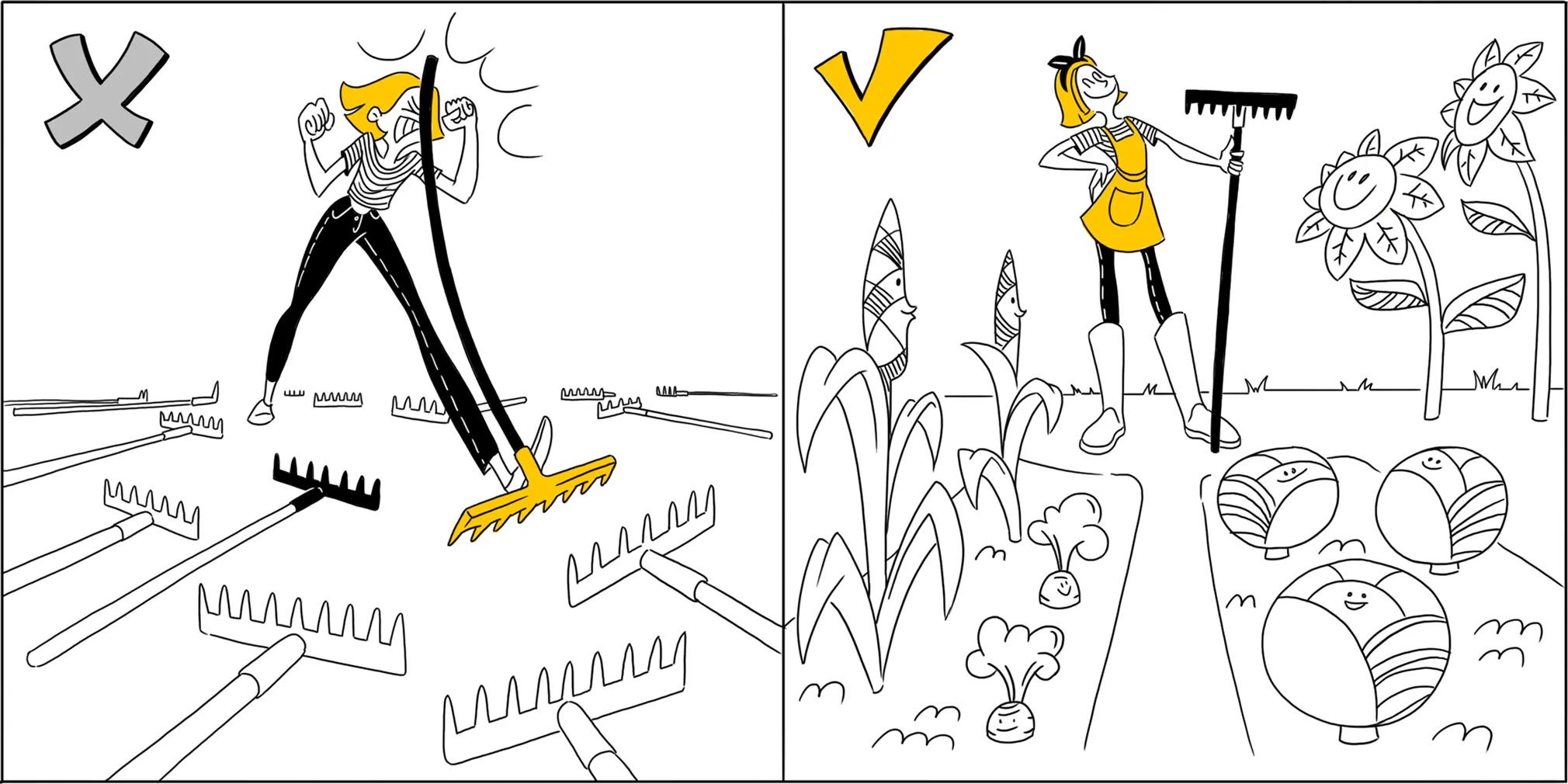
Mistakes are a sign that there’s something you don’t know yet.
If you make one, just notice it and start fixing it.
When we first started working on motion graphics, we illustrators didn’t prepare files correctly for animation. Animators didn’t confront us directly — they just vented to our production lead, so the issues kept happening.
Eventually, I created a straightforward guide: technical requirements, common mistakes, and examples. That one document saved everyone a lot of frustration.
The key takeaways:
- Learn to turn your mistakes into learning points.
- Make checklists.
- Document your discoveries.
- Become an expert in the areas where you once felt weak.
Rule №4. Explore multiple solutions.
Once, I took a character design course taught by animator and artist Andy.He shared methods for generating many different solutions to the same task.Andy explained that the art directors he works with expect to see several options because, in a competitive field, one sketch is never enough.
Pixar has a rule:If you come up with a brilliant idea, don’t rush to execute it.Come up with three more.And you should love all of them equally.That’s when you know your solutions are solid.
Generate multiple sketches. Try wild versions. Explore awkward or exaggerated concepts. You’ll often discover better ideas hiding in the mess.
Yes, generating multiple versions takes effort, but it doesn’t have to be overwhelming.
There are innovative ways to speed up the process without sacrificing creativity.
Here are a few quick tips illustrators can use to work faster and smarter:
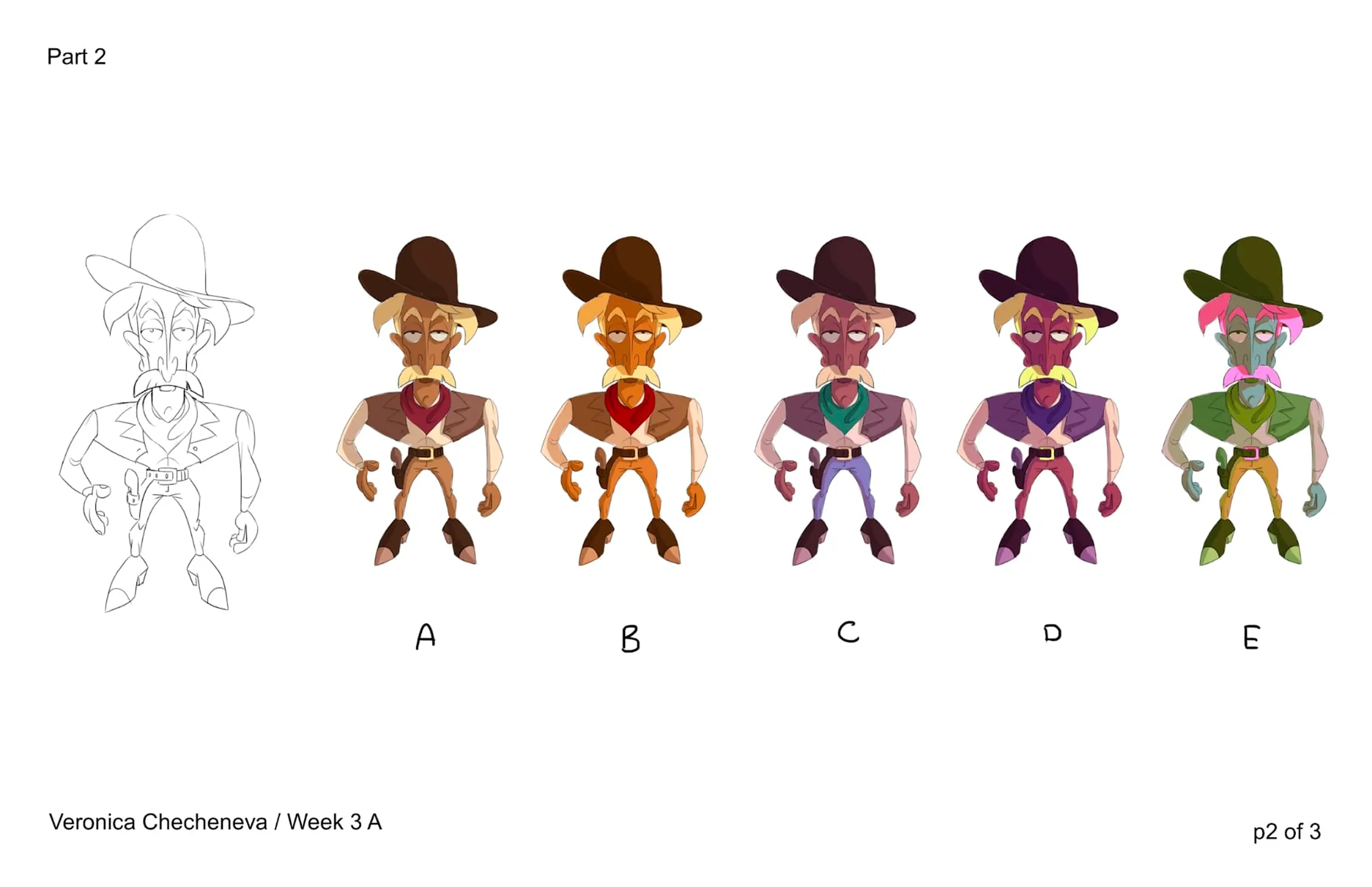
Choosing a Color Palette for a Character.
You can quickly and easily create a color selection like this using Hue/Saturation in Photoshop.
It doesn’t take much time, but it gives you many options.
Enjoy it and go for a more creative version, like Option E.
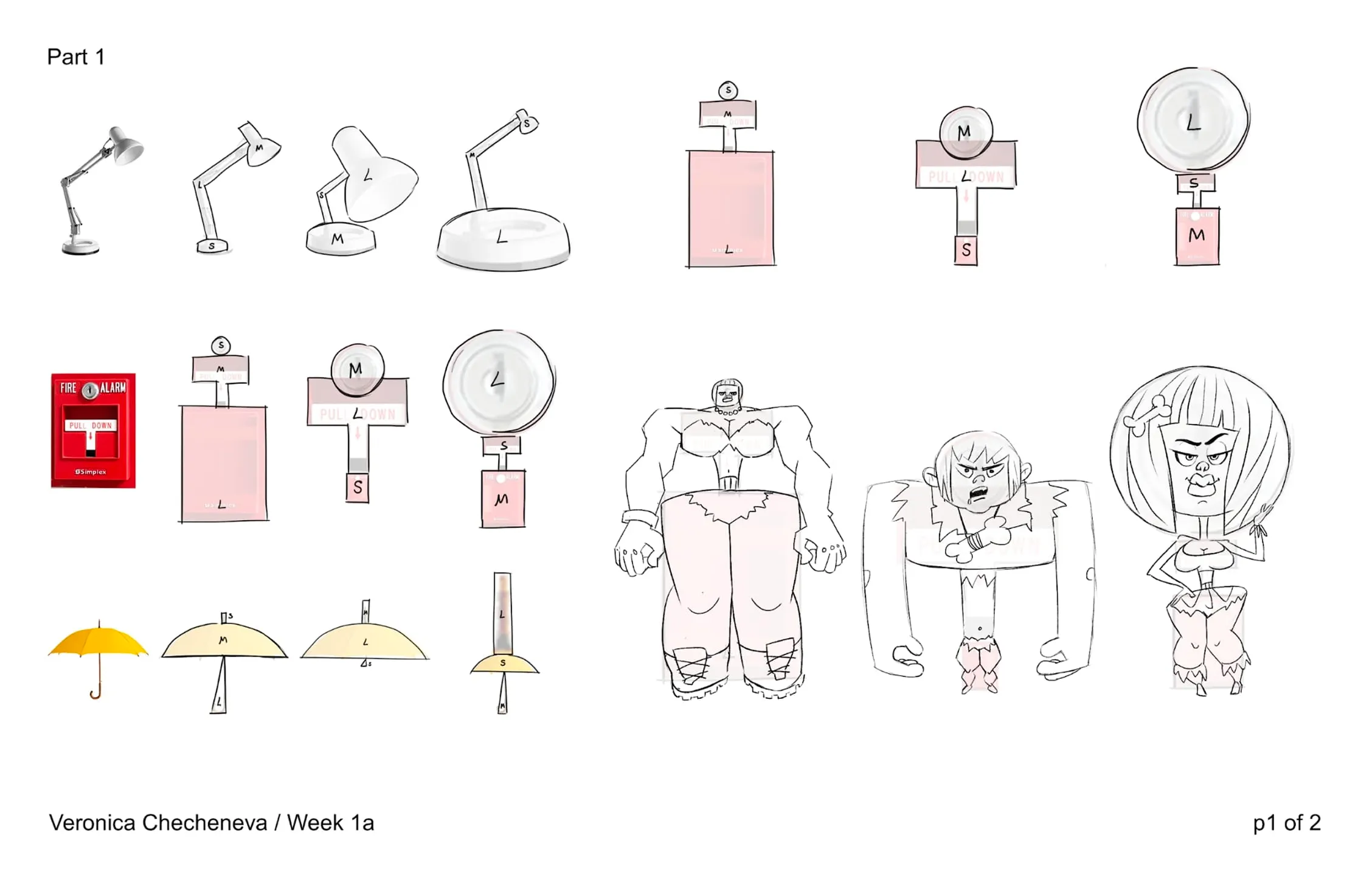
Creating Character Variations Based on Observing Objects and Changing Proportions.
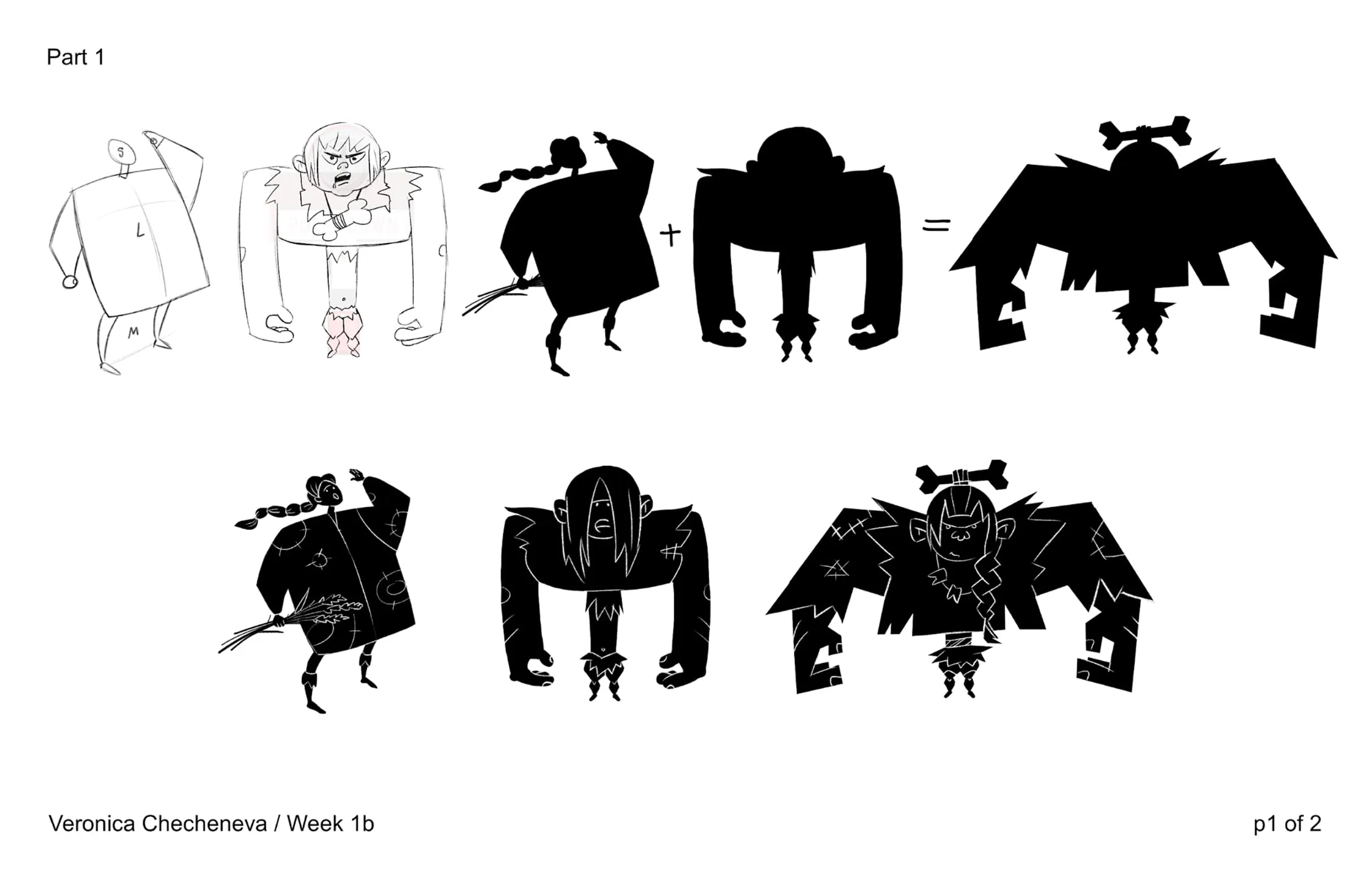
Combining Two Characters to Create a New Variation
Rule №5. Trust the Feedback
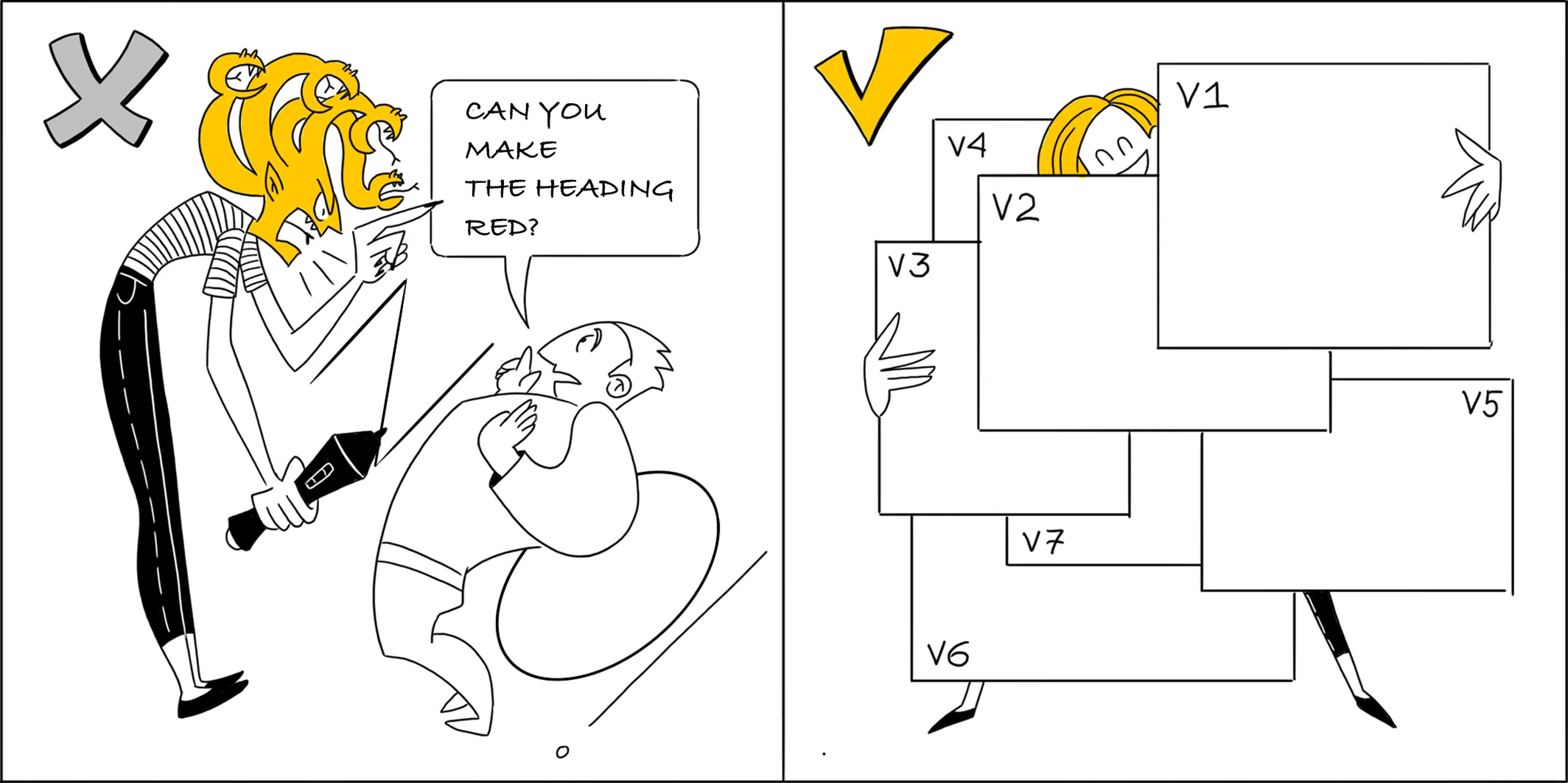
Sometimes, an art director gives you feedback that you completely disagree with. It happens to me: I start arguing, eventually giving in and making the changes, but with resentment and minimal effort. That’s a bad habit I’m working to let go of.
Trust the feedback — even when you don’t get it. If your team comprises reasonable people, then everyone’s goal is to improve the project.
Try the suggested changes sincerely, not out of spite. Approach them as if they were your ideas. Ask yourself, What’s the problem they’re seeing? If you still don’t know the logic, do it anyway because it’s another possible solution. Maybe you don’t understand now, but you might appreciate it later.
The key is to stay patient, kind, and open-minded.
Rule №6. Get Inspired by Everything Around You
I follow hundreds of artists and design pages. My reference folder contains styles, techniques, calligraphy, architecture, and even cloud photos I’ve snapped on walks.
Collect what fascinates you. Study it. Surround yourself with visual variety — it expands your creative toolbox.

Recently, I saw some amazing clouds, and they’ve inspired one of my smaller projects.

Don’t limit your inputs. Keep feeding your brain with beauty.
Rule №7. Shake Things Up to Discover Your Weak Spots

Once my colleague convinced me to join an illustration battle. I thought I was ready. Well, I wasn’t.
I used a random prompt generator and gave myself 15 minutes… but everything came out bad. That frustration revealed holes in my skills, so I went back to the basics: sketching, expressions, and proportions.
The battle turned out to be a great wake-up call, even though I initially thought it was a dumb idea.
And once again, it proved the point: trust the feedback.
Uncomfortable challenges show you what you need to improve.
Set weird constraints. Join contests. Try time-limited prompts. You’ll find your weak spots — and grow from them.
Rule №8. Never Assume You Know Enough
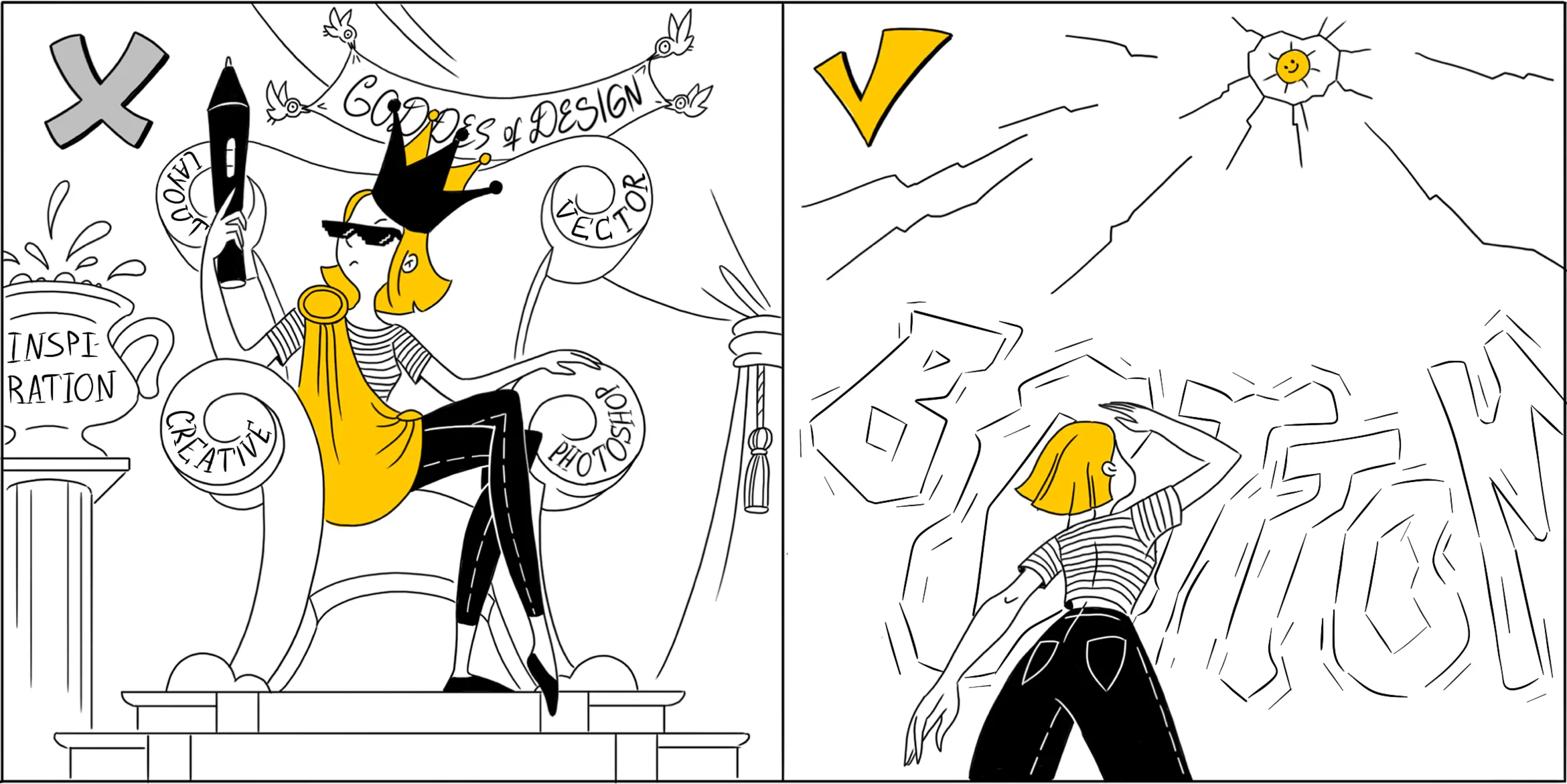
A couple of years ago, I took a character design course.
It was amazing — I learned a lot and seriously improved my skills.
Then, I signed up for another character design course.
At first, I hesitated — “I already know all this, don’t I?”
But I’ve realized: as soon as you start thinking you know everything, it means you don’t.
I took the course and learned tons of new, valuable things.
And if I see another character design course, I’ll take that one too.
If you think you’ve mastered something, that’s a red flag. There’s always more.
Stay humble. Stay hungry. Keep taking courses — even in things you think you “already know.”
Rule №9. Cross-Pollinate Your Skills
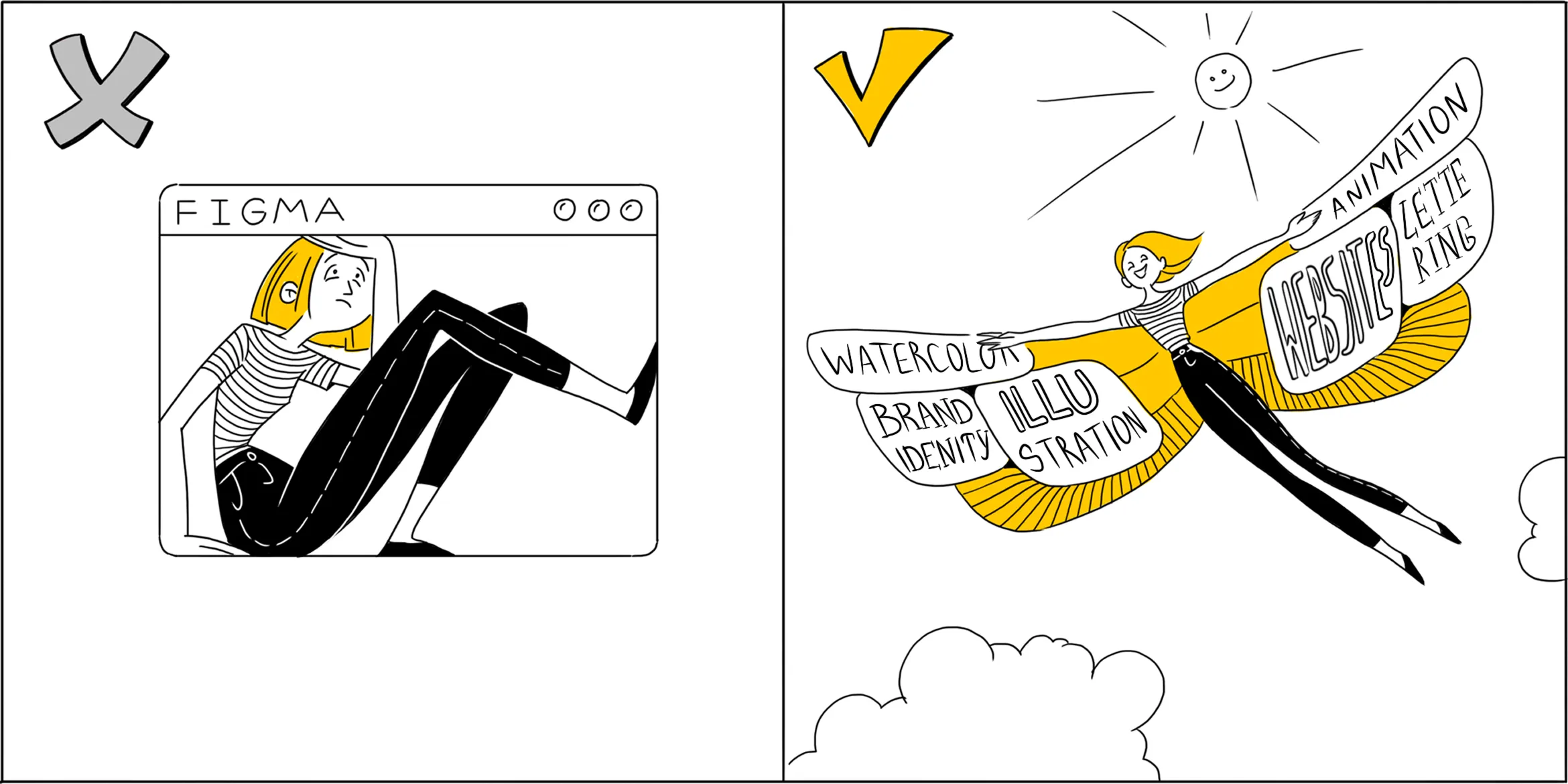
I don’t just illustrate — I’ve explored motion design, branding, matte painting, typography, and industrial design. Each took time to learn, but every new challenge made me a stronger specialist.
From design, I learned about process: how to structure work, focus on meaning, test output, and work with grids, composition, and typography.
Watercolor helped me improve my color sense, style, and visual harmony.
Lettering, which I started for fun, has often come in handy. It teaches patience, precision, attention to detail, and a better understanding of letterforms and typography.
I once animated videos in After Effects, and now that experience helps me design and create motion illustrations.
3D skills would also level up my work. I’ve made hesitant attempts, but I’m learning it again now.
Working in too many areas might seem to spread you too thin or cause you to lose focus.
But I see people around me who have only grown stronger because of it.
For example, my husband, who works in animation, learned to code and now builds his games, drawing, animating, and programming them himselfhimself.
The fact that a new area of interest should reache a solid enough level to be useful.
Then it becomes a strength, not a distraction.
Final Thoughts
These working principles are universal.
Anyone can try them.
They’re not always easy to follow, but if you do, they help you stay sharp, grow, and evolve as a creative person.
Some points might not work for everyone.
Saying “I’m at the bottom” might sound harsh or controversial.
But what matters more is the mindset:
How much is still ahead to learn?
And how much more could I create?