


Not Freedom but an Illusion: Owlcat Games’ Game Designer Director on How Choice in RPGs Really Works
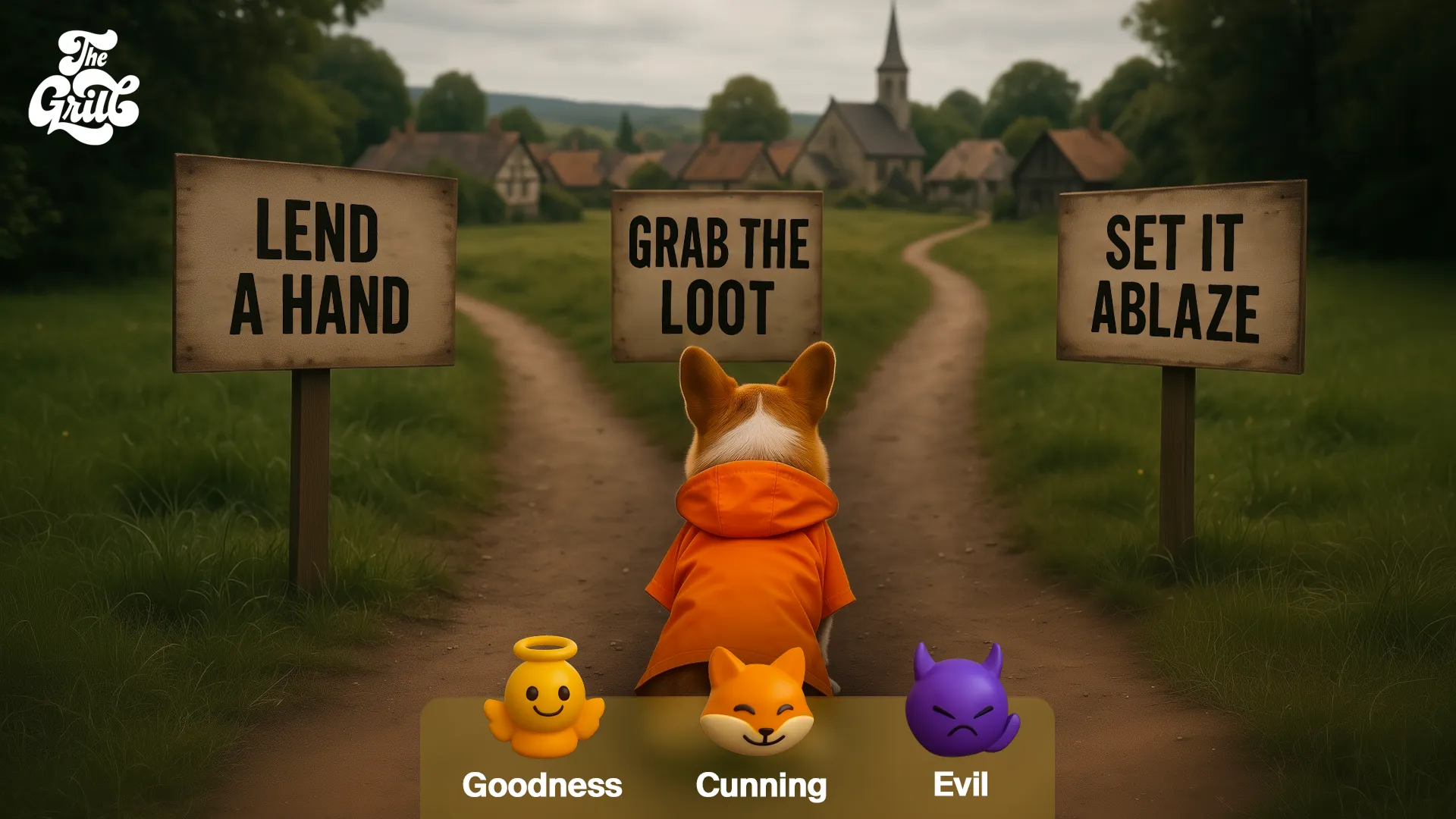
Leonid Rastorguev revealed the key principles behind creating games where every player’s decision feels unique and shared practical tips for designers.
When we start an RPG, it feels like everything depends on us — who to be, whom to save, whom to betray. But behind that freedom lies careful calculation and the cold architecture of game design.
At The Grill design festival in Belgrade, organized by Beavers Brothers, Owlcat Games’ Game Design Director Leonid Rastorguev explained why choice in games is nothing more than an illusion — and how to make that illusion feel real and fair.
What Is an RPG: Not a Genre, but a Lived Fantasy

For Leonid, an RPG is not just a role-playing game but a chance to live out a personal fantasy.
It doesn’t matter whether it’s expressed through dialogue trees, skill progression, romances with companions, or dice rolls.
What matters is giving the player the feeling that they are creating their hero themselves:
- choosing their origin and personality
- building connections with the world
- making decisions guided by an internal moral compass
Example from Owlcat Games: In Pathfinder: Wrath of the Righteous, NPC reactions depend not on a simple “good–evil” scale but on the specific choices a player has made throughout the game. This creates the illusion of a unique, personal journey, even though the game’s structure remains carefully designed.
Tip:
Don’t start a project with mechanics. Start with the question: What fantasy should the player experience? Once you know the answer, the mechanics will fall into place on their own.
The World as a Mirror of the Player
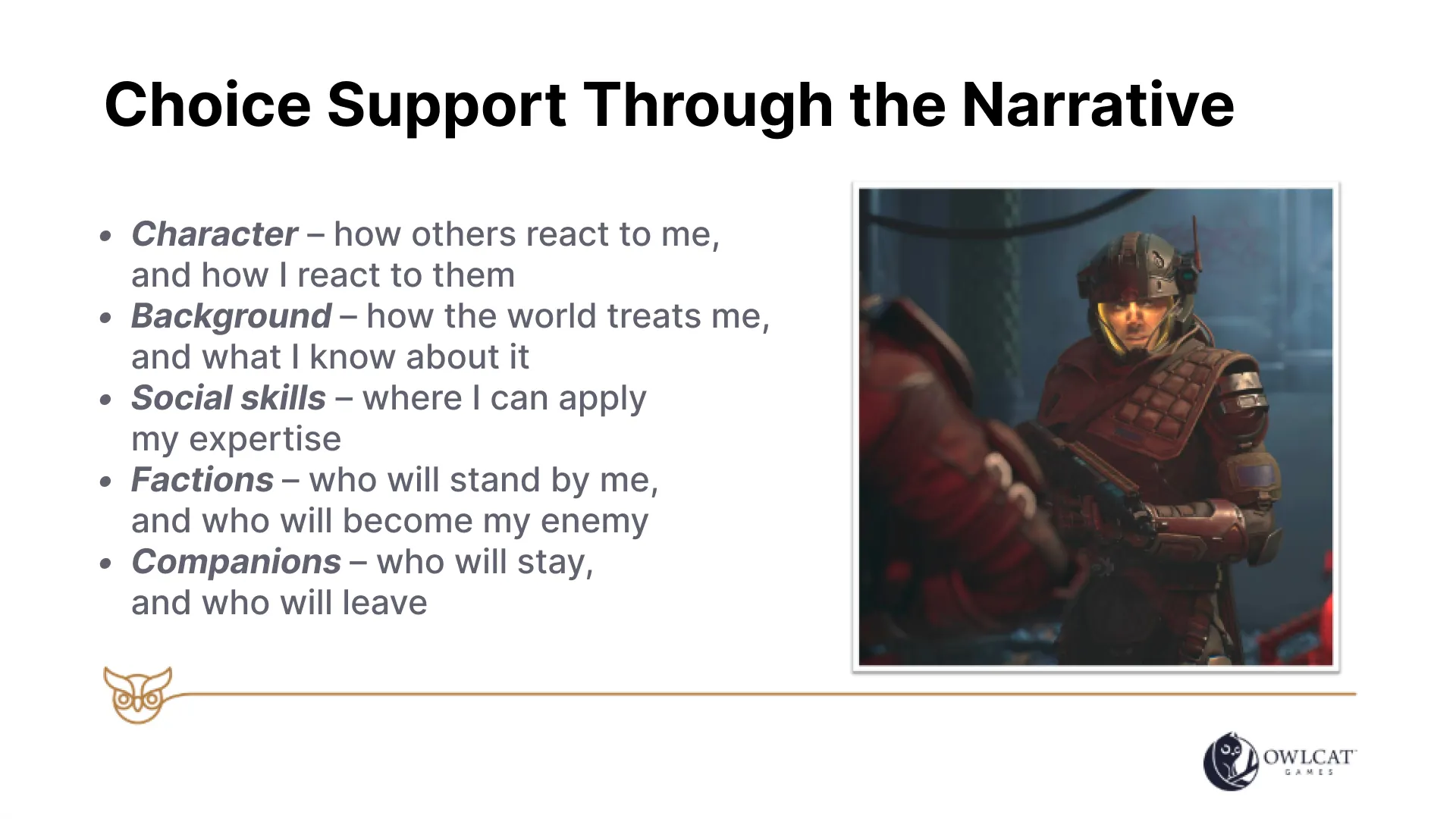
According to Leonid, the world of an RPG is not just a backdrop but a mirror that reacts to the player.
Reactivity is the core mechanic of the genre.
It reveals itself in the details:
- The peasants cheer for the hero who saved their village
- Or throw tomatoes at him if he burned it down for profit
Even something as small as a hacked terminal or an extra line of dialogue creates the feeling of a living world.
This is the UX level of an RPG — when the player’s experience comes not from the interface, but from emotional feedback.
A designer doesn’t need to build a massive world. It’s enough to make one respond.
As long as the game notices, reacts, and acknowledges the player, it feels alive.
The Multiverse of Madness — and How to Tame It
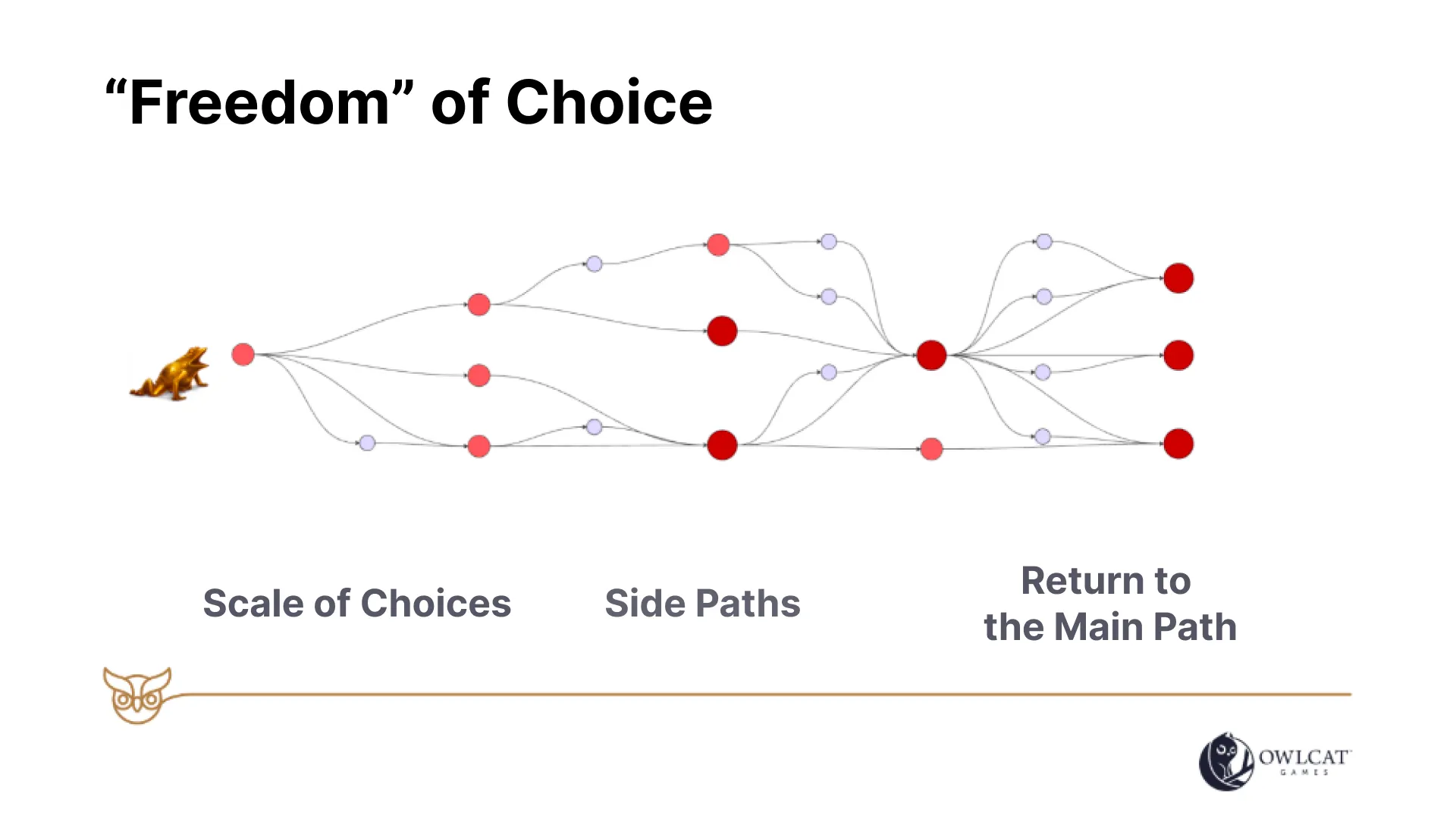
The problem with freedom in RPGs is simple: if every choice creates a new reality, within fifteen minutes, you end up with a multiverse of madness.And that’s impossible to maintain — neither budget nor resources can handle it.
Leonid suggests three tools to tame the chaos:
- Scale your choices.
Small (a dialogue line), medium (a side quest), large (a story-changing decision).
Tip: Prioritize choices according to your budget. Not every fork needs to lead to a new branch. - Use side paths.
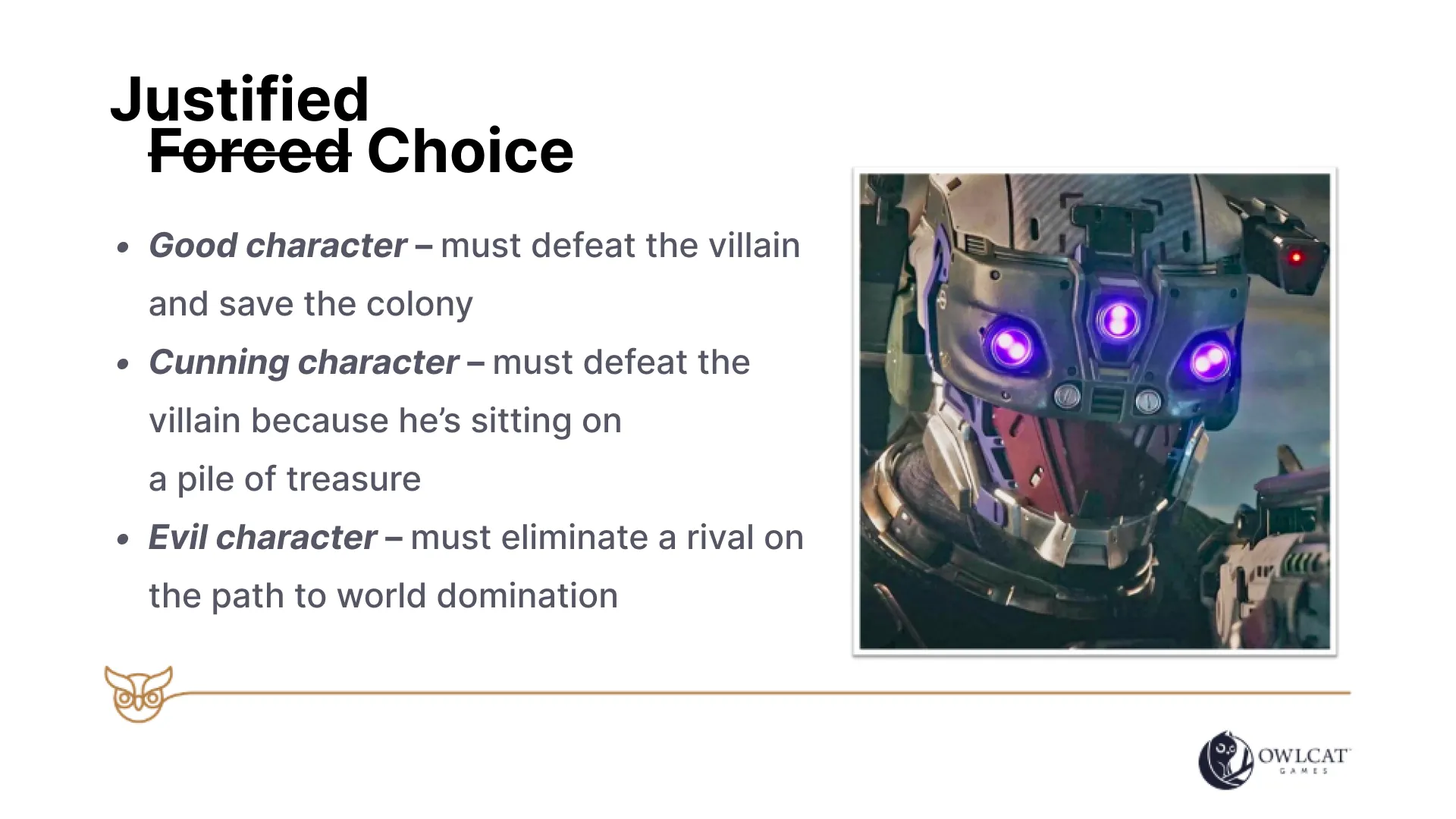
Alternative scenarios should loop back to the main storyline. For instance, you can complete a quest through bribery or combat but still arrive at the same key plot point. - Motivate through character.
Returning to the main path should feel natural and justified.
- A good character saves the village
- An evil one eliminates a rival
- A cunning one collects the treasure
The goal isn’t to give the player absolute freedom — it’s to create believable freedom.
Because the illusion of choice is worth more than a chaos of possibilities.
UX Designers and the Power of “Stupid Questions”
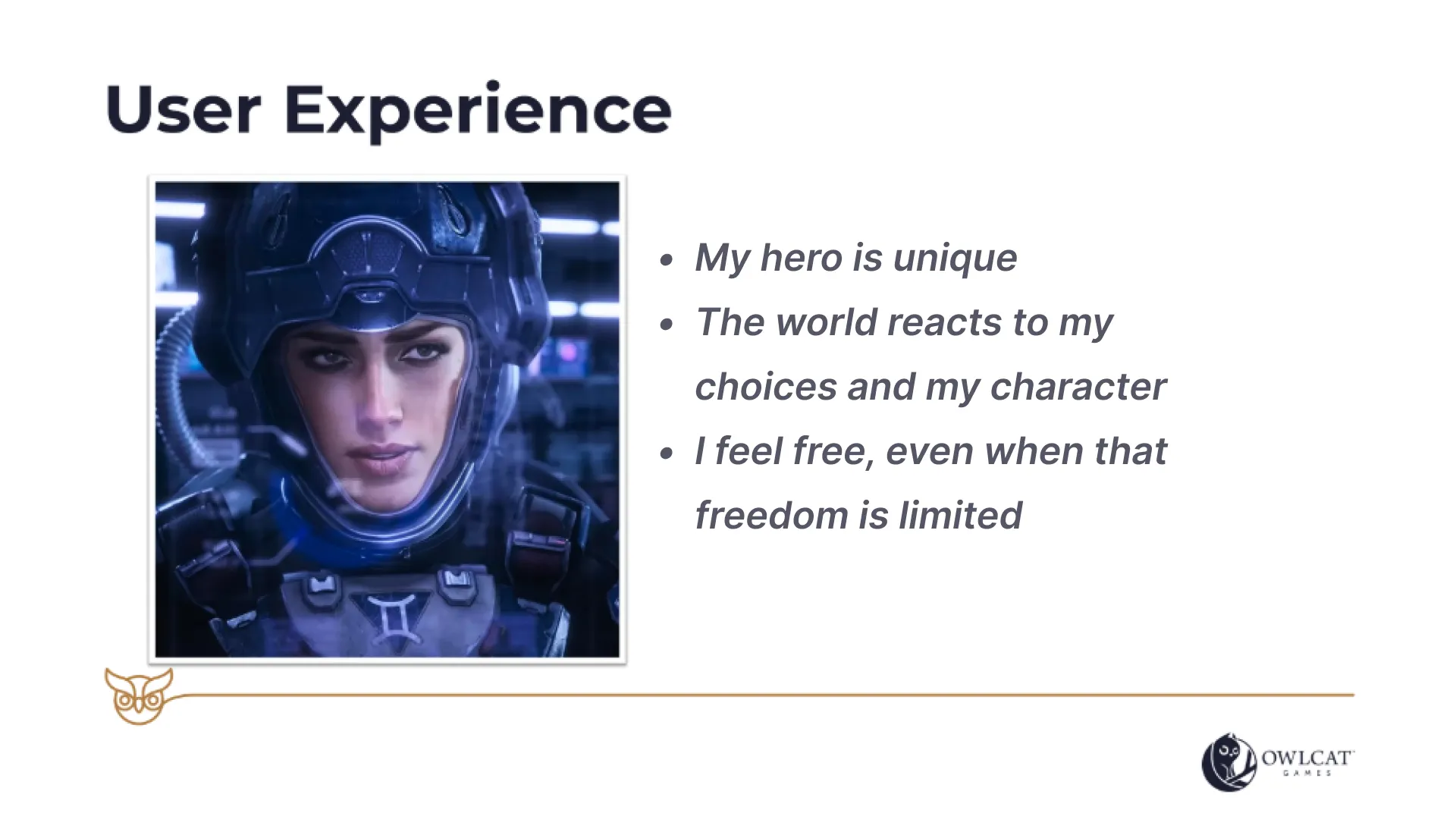
According to Leonid, UX designers are the key allies in building meaningful player choice.
Their superpower is asking “stupid questions” — the ones that expose logical gaps and force the team to think from the player’s perspective.
UX helps make choices feel honest:
- The player understands why they’re doing something
- They see the result
- They don’t feel tricked
Tip for beginners: Read The Design of Everyday Things by Don Norman — a UX classic that explains how perception and feedback create a sense of control.
Before releasing your game, ask yourself those same “stupid” questions from the player’s point of view:
Why am I doing this? What am I getting out of it? Do I feel my impact?
If the answers are clear, your UX is ready.
Illusion as an Art Form
Leonid speaks about freedom with a hint of irony. True freedom in games is impossible, but the feeling of freedom can be designed.
What you need isn’t a script, but a structure.
The player may believe their decisions shape the world, while in reality, the designer simply manages the boundaries of that influence.
That’s the essence of RPG design — the art of directing attention and belief.
A player should never feel manipulated.
If they believe they’re in control of the story, it means the designer has done their job right.
Conclusion
Good game design isn’t a set of rules — it’s an architecture of perception.
It creates a space where the player feels like the author, even when every decision has been carefully planned.
That’s the real mastery of a designer: not to control the player directly, but to build a system where they want to make the right move on their own.
RPGs, like life itself, are not about endless possibilities but about meaningful choices.
And that’s why the illusion of freedom is the most honest form of connection between the player and the designer.
Subscribe to our Telegram to stay updated on design events and insights from Beavers Brothers: https://t.me/designovisad
LinkedIn profile: https://www.linkedin.com/company/beaversbrothers/