


The cyclic nature of the digital era: Why we’re talking to computers through text again, and where the next turn of the spiral will take us

At The Grill festival in Belgrade, Roman Nebel, co-founder of Sobaka Pavlova, shared his vision of how interfaces have evolved, why we communicate with machines through prompts today, and where technology is heading next. His talk covered the history, current trends, and possible future of interfaces, as well as practical insights for designers and engineers.
The evolution of interfaces: from terminals to VR and back
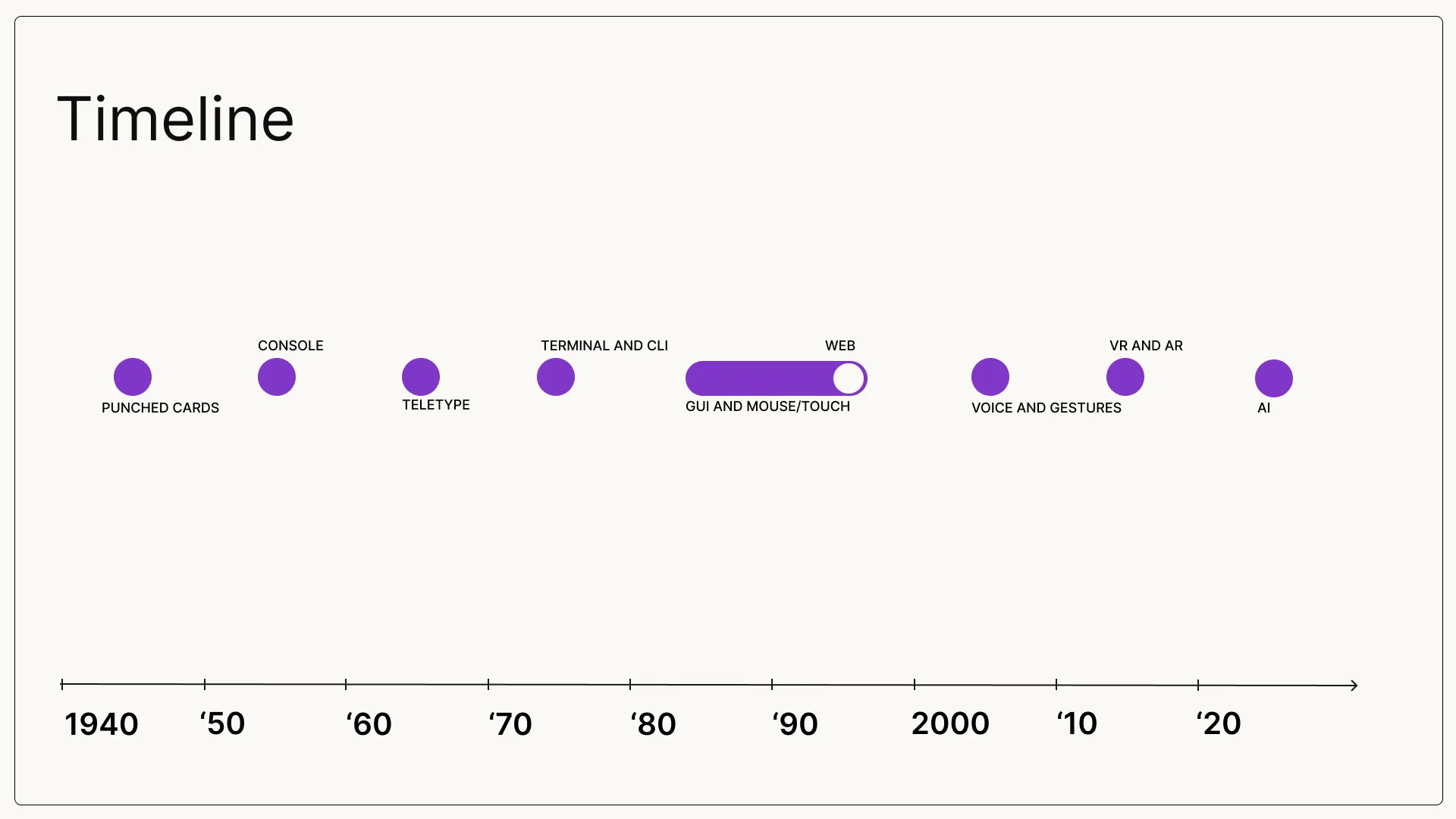
Roman reminded the audience that the history of human–computer interaction is cyclical: old approaches tend to return in new forms. In the 1970s, users worked with terminals where commands had to be entered as text, requiring them to memorize complex syntax. With the advent of personal computers by Apple, graphical elements — including buttons, switches, and icons — gained popularity, making interaction much easier.
The invention of the mouse and, later, touchscreens (the 2007 revolution led by Steve Jobs) made interaction more natural. But there were also “dark times”: websites of the late 1990s and early 2000s were overloaded with elements and lacked clear interfaces.
Later came voice and gesture control, followed by VR and AR, where interfaces moved into the user’s space. Today, however, as Roman notes, we are returning to text — but in a new form: prompts for ChatGPT and other AI systems. The cycle has come full circle, only at a higher level.
The present: the language of machines vs. the language of humans
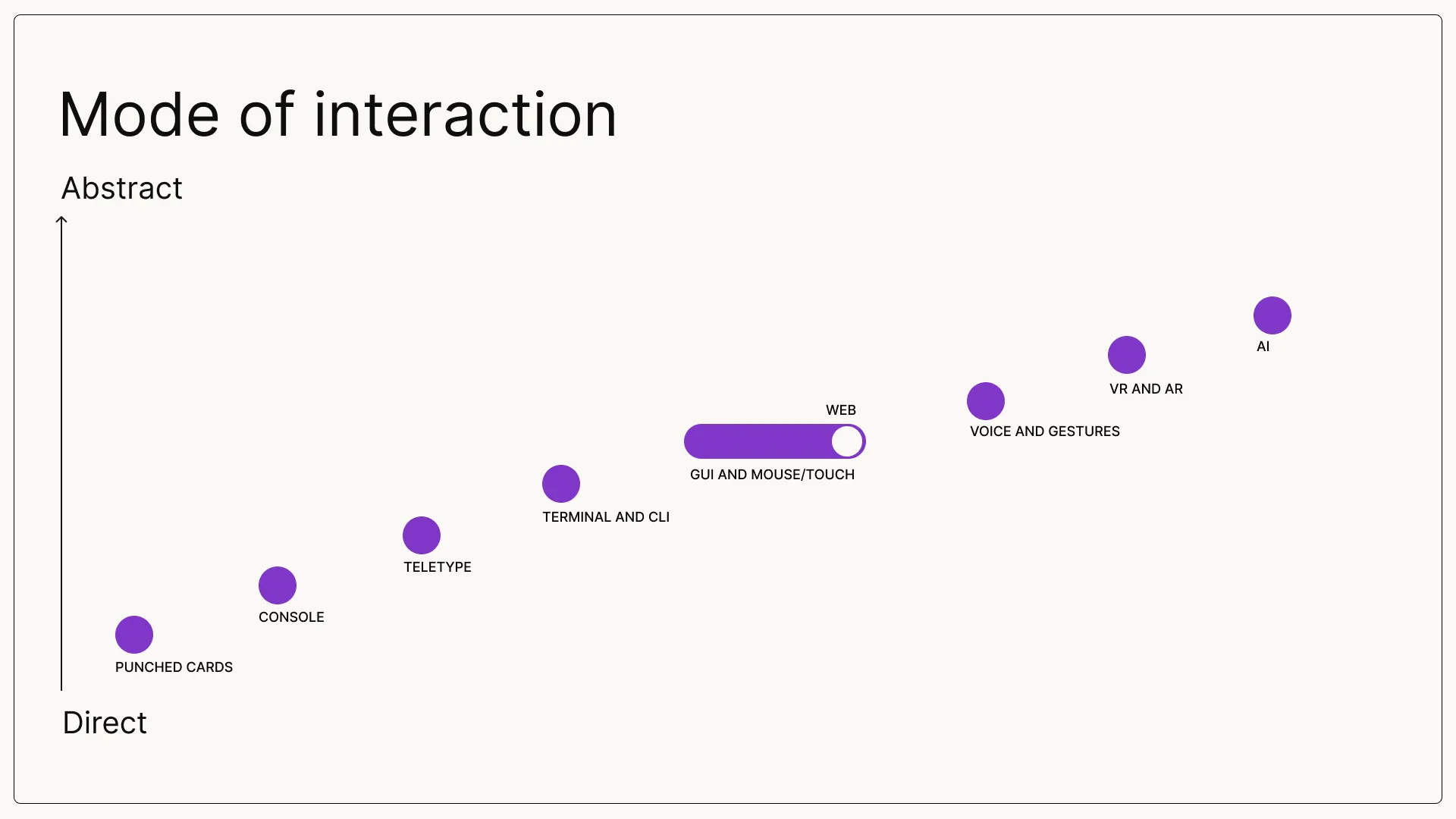
Today, we communicate with computers through prompts. According to Roman Nebel, this is no longer just text but a new language — one we must learn to speak. He gives an example: in theory, you could tell an AI something like “Go to my Google Drive and get the file,” but no one would actually do that — it’s simply inconvenient. People often forget the paths to their documents and would rather click the “Attach file” button. That’s why even ChatGPT now includes buttons and visual elements — they make interaction more familiar and comfortable.
As a result, modern communication with computers has become hybrid: we may write in Russian or English, but it’s the machine that sets the rules. The same pattern appears in interface design: first, things become simpler (as with terminals or AI tools), then more complex (like Photoshop), and eventually simplify again.
Two scenarios for the future of interfaces
Roman outlines two possible directions for how interfaces might evolve.
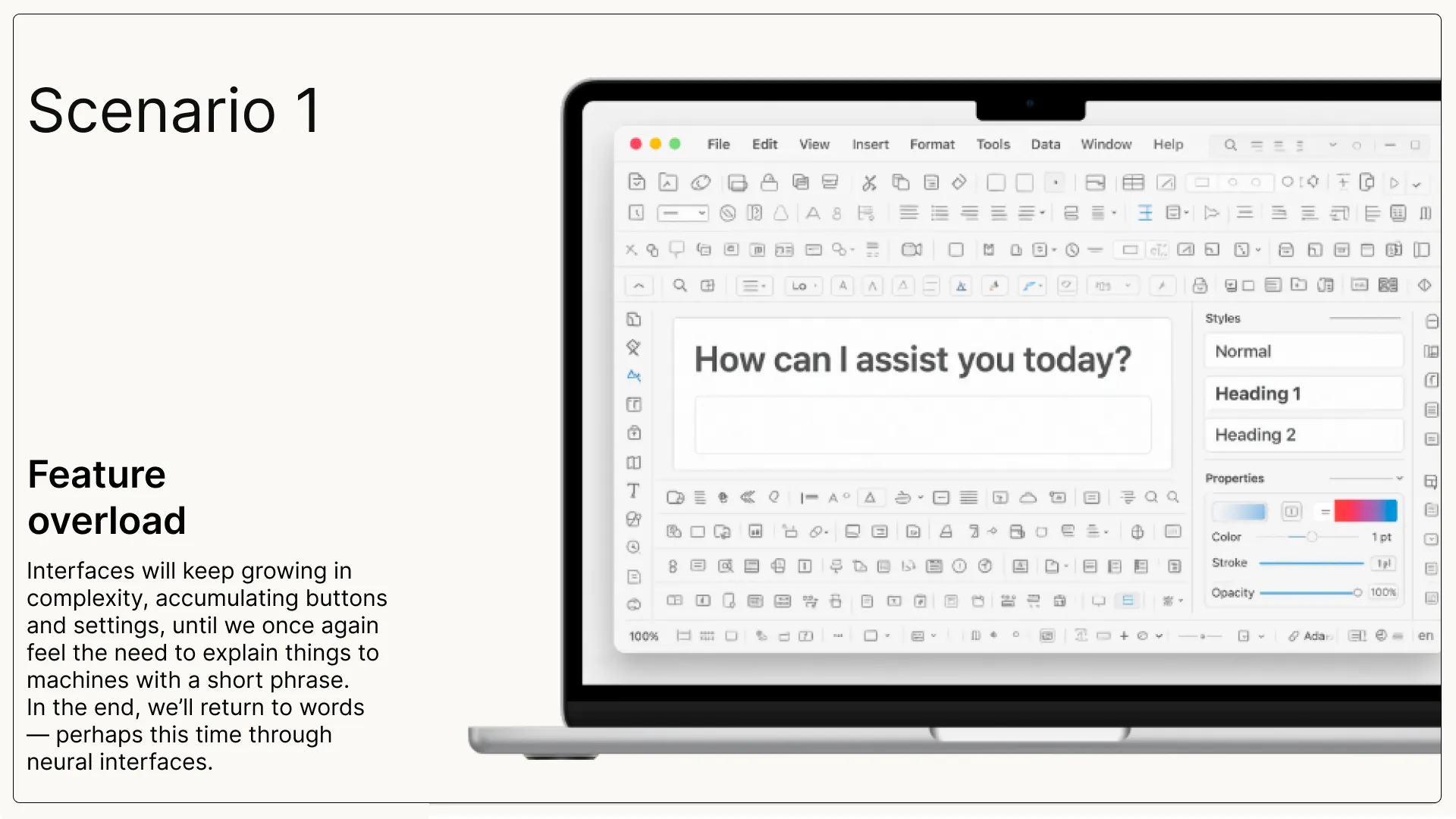
Scenario 1 — increasing complexity. Interfaces continue to grow until they become difficult to use. A clear example is Photoshop, with its multivolume manuals and endless panels. Even simple chat-based tools may gradually accumulate extra functions, settings, and plugins, turning into complex ecosystems.
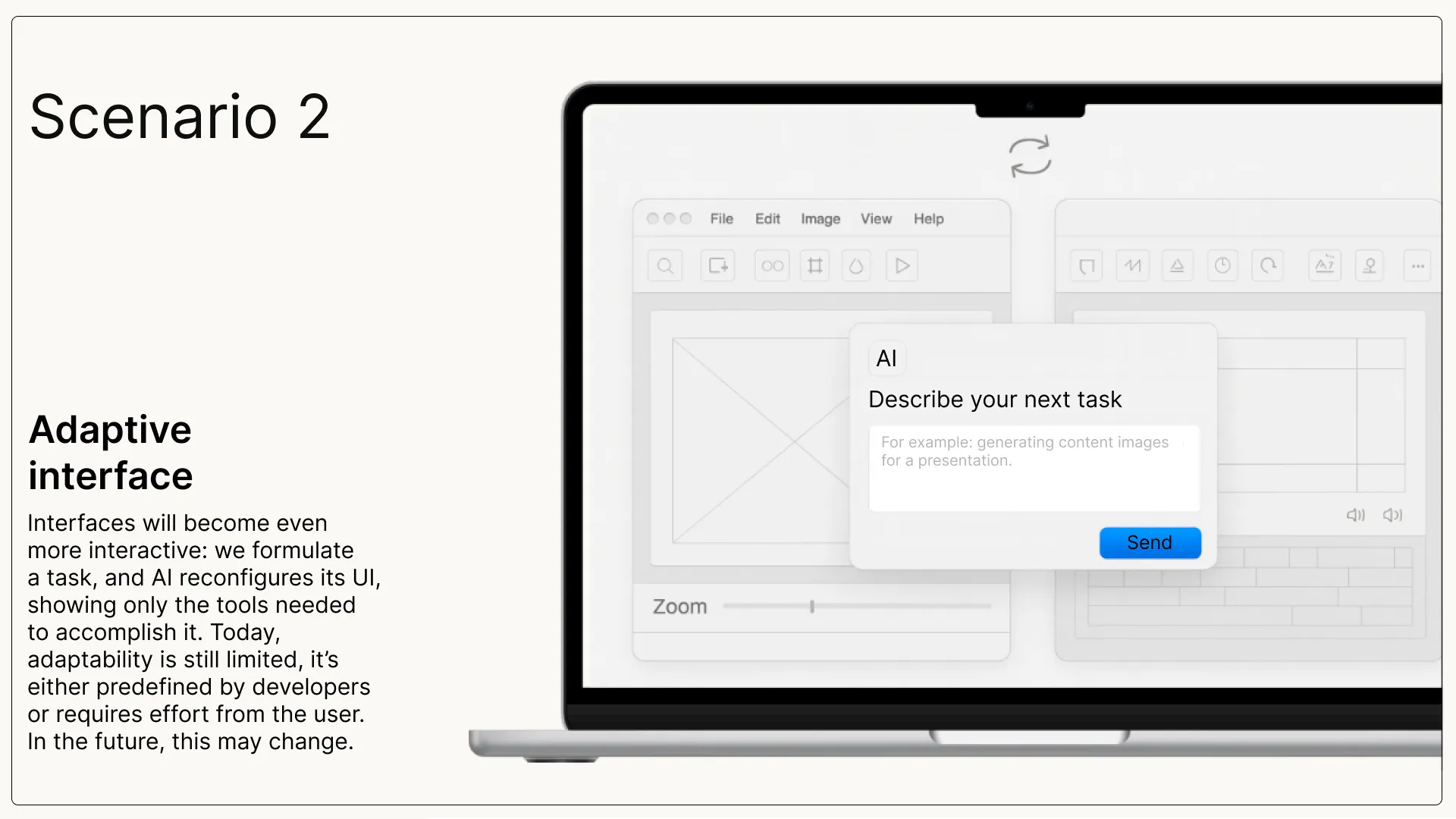
Scenario 2 — adaptability. The computer reshapes its interface according to the user’s task. Want to write a book? Your MacBook turns into a digital typewriter. Editing a video? The layout transforms into a lightweight editing suite. We can already see early signs of this approach: tools like Comfy UI allow users to build visual block diagrams for generative models — a step toward a universal, adaptive interface shell.
Practical takeaways for designers and engineers
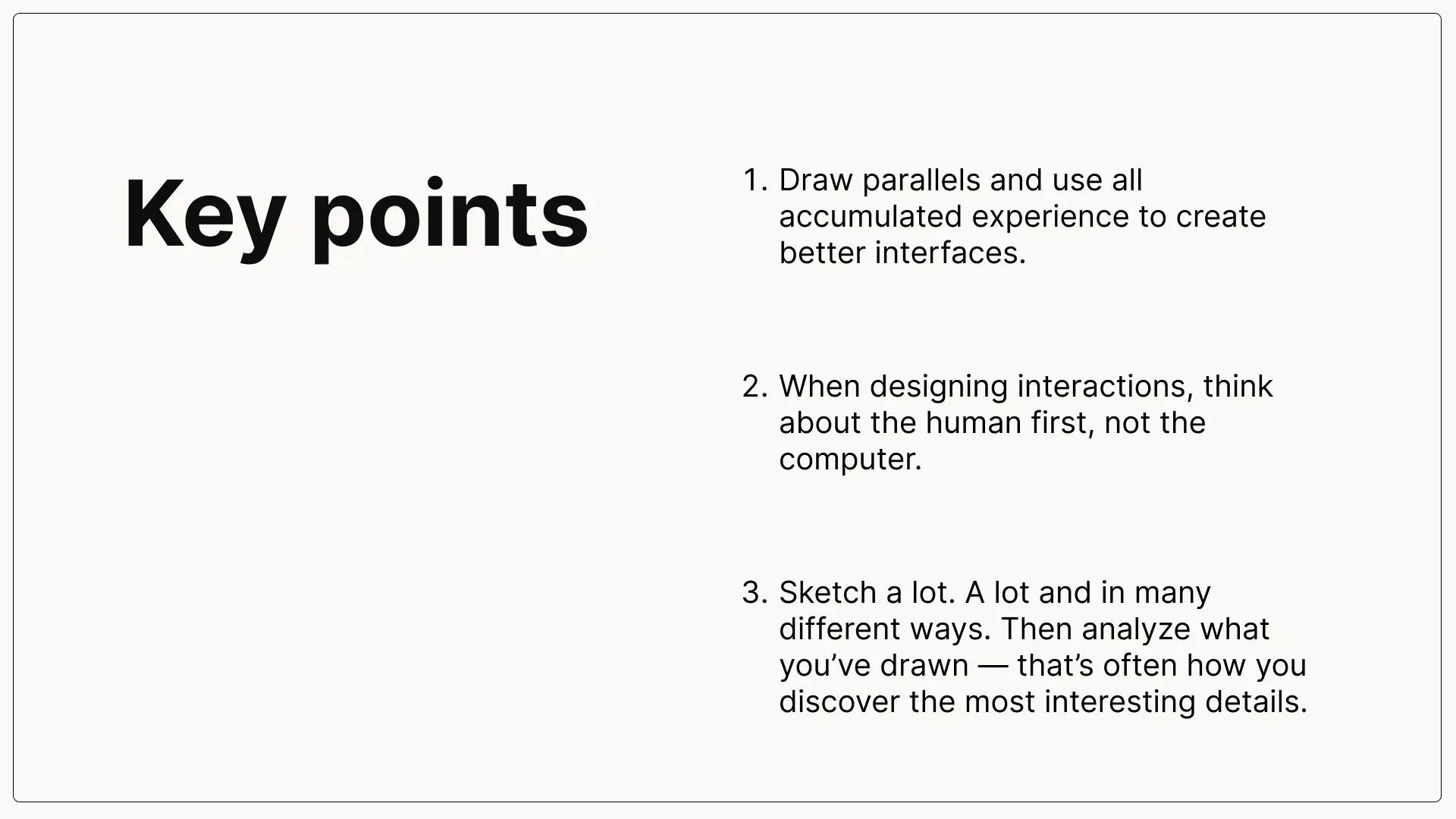
Learn from the past. The history of interfaces repeats itself: terminal → GUI → voice → VR/AR → prompts. Many old ideas can be reimagined and applied in today’s context.
Keep the human at the center. Currently, machines dictate the rules of communication. Take voice assistants like Alexa or Siri, they understand simple commands (“Play music”) but fail with complex scenarios. It’s a reminder that the language of machines still doesn’t fully align with ours.
Generate multiple variations. The best solutions emerge through experimentation. AI can produce countless ideas in seconds, but it’s still the human who makes the final choice.
Conclusion
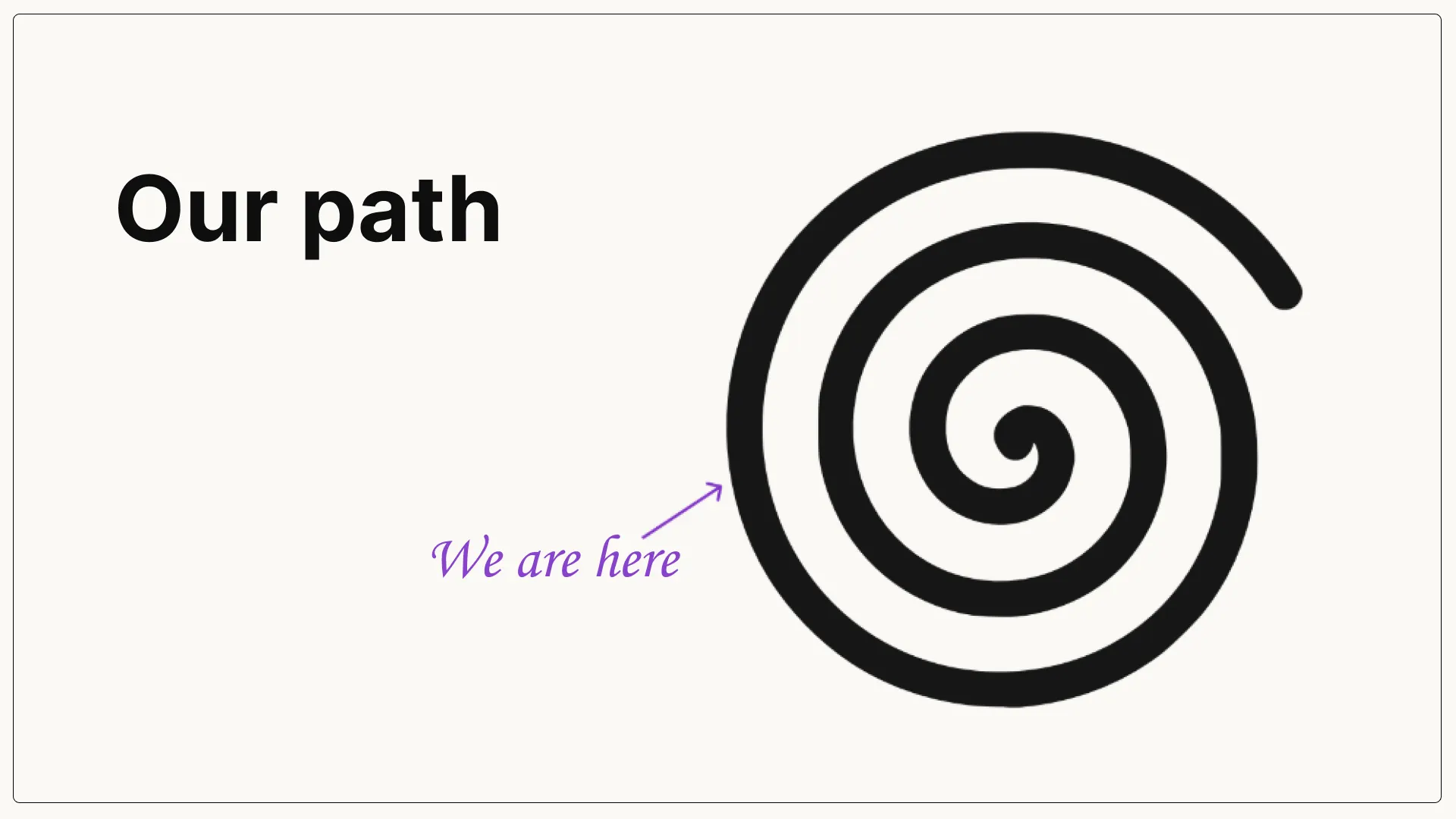
The evolution of interfaces is accelerating. What once took 10–20 years to shift paradigms now happens in just three to five. We haven’t stepped off the spiral; we’re racing along it faster than ever. Some might see chaos in this motion, but Roman Nebel suggests seeing a pattern instead. By understanding these cycles, we can stop guessing about the future and start designing it, grounded in the wisdom of the past and the technological possibilities of the present.
The main task for designers and engineers today is not merely to create new interfaces but to recognize these recurring patterns, learn from history, and adapt technology to human needs. The present and future of human–computer interaction will rely on a hybrid of human and machine languages, and the key challenge is to make that dialogue natural, clear, and truly meaningful.